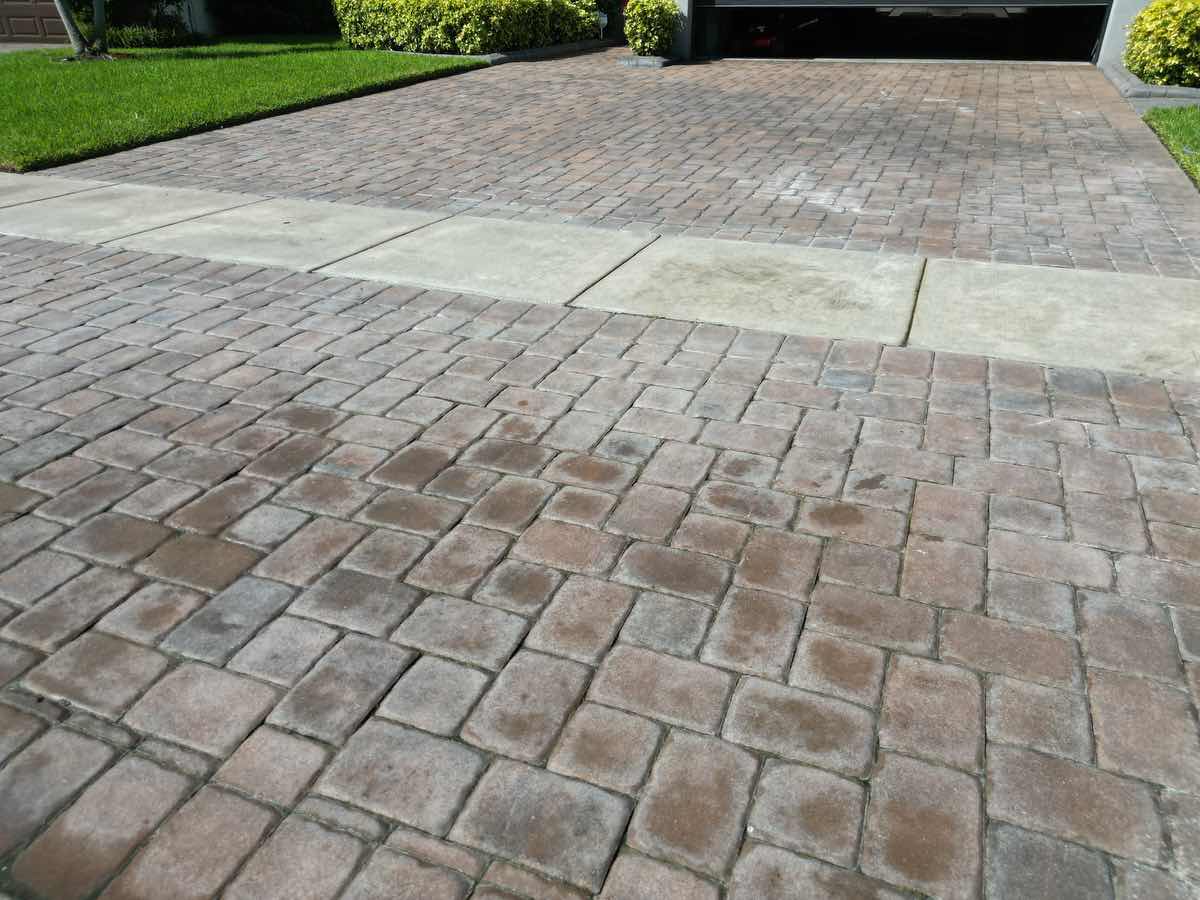
You’ve invested in beautiful pavers for your driveway, pool deck, or patio. They looked stunning when first installed—rich colors, clean lines, and that polished curb appeal that makes your property stand out. But now, just a year or two later, those vibrant hues have dulled to washed-out grays and pale shadows of their former selves. If you’re a Port St Lucie homeowner wondering why your pavers are fading so quickly, you’re not alone.
The good news? Fading pavers aren’t a sign that you chose poor materials or that your installation was faulty. In most cases, it’s simply the result of Florida’s intense climate working overtime on unprotected surfaces. Understanding why this happens—and what you can do about it—can help you restore your pavers and protect them for years to come. As trusted paver maintenance experts in Port St Lucie, we’ve seen this issue countless times, and we’re here to break down exactly what’s happening and how to fix it.
Florida’s Climate Is Brutal on Pavers
Let’s start with the reality: Port St Lucie’s weather is gorgeous for residents, but it’s merciless on outdoor surfaces. Your pavers face a triple threat that accelerates fading faster than in almost any other region.
First, there’s the UV exposure. Florida receives some of the most intense ultraviolet radiation in the United States. Day after day, your pavers absorb direct sunlight that breaks down the pigments in the concrete or brick. Think of it like leaving a piece of colored fabric in a sunny window—over time, those colors bleach out. The same process happens with pavers, just at a slower pace.
Second, moisture and humidity play a major role. Port St Lucie’s subtropical climate means your pavers are constantly exposed to humidity, afternoon thunderstorms, and morning dew. When water seeps into unsealed pavers, it can carry away fine particles of color and create conditions for efflorescence—those white, chalky deposits that make pavers look faded and dirty.
Finally, if you’re near the coast, salt air adds another layer of challenge. Salt accelerates wear on paver surfaces and can contribute to that weathered, faded appearance much faster than you’d see in inland areas.
Why Some Pavers Fade Faster Than Others
Not all fading is created equal. During our work throughout Port St Lucie, we’ve noticed that certain factors make some properties more vulnerable than others.
Color intensity matters. Darker pavers and those with richer pigments tend to show fading more dramatically. A charcoal or terra-cotta paver that loses 20% of its color is far more noticeable than a light beige paver experiencing the same degree of fade.
Installation age and initial sealing are critical. Many contractors install pavers but skip the sealing step entirely, or they apply a minimal seal that wears off within months. If your pavers were never properly sealed after installation, they’ve been exposed and vulnerable from day one. We often see pavers that are only two or three years old but look a decade old simply because they were left unprotected.
Surface exposure also plays a role. A pool deck that gets full sun for eight hours a day will fade faster than a shaded walkway. Similarly, high-traffic areas where pavers experience constant foot traffic, pool chemicals, or vehicle tires will deteriorate more quickly.
The Hidden Culprit: Lack of Proper Sealing
Here’s what many homeowners don’t realize: pavers are porous. Without a protective sealant, they’re essentially bare concrete or clay exposed directly to the elements. It’s like having hardwood floors with no finish—they might look fine initially, but they won’t stay that way.
Professional paver sealing in Port St Lucie creates a protective barrier that locks in color, repels moisture, and shields against UV damage. When we seal pavers properly, we’re not just adding shine—we’re adding years of life to the surface.
A quality sealant does several important things:
- Blocks UV penetration so sunlight can’t break down pigments as quickly
- Repels water and stains, preventing moisture from seeping into the paver body
- Inhibits efflorescence by keeping salts trapped below the surface
- Enhances color, bringing back that “wet look” vibrancy that makes pavers pop
Without this protection, your pavers are fighting a losing battle against Florida’s climate.
Warning Signs Your Pavers Need Attention
How do you know if your pavers have crossed from “showing some age” to “need immediate help”? Here are the telltale signs we see most often:
Color inconsistency is usually the first red flag. If parts of your paver surface look significantly lighter or more faded than others—especially in high-sun areas—that’s your pavers crying out for protection. This often happens when an old sealant has worn away unevenly.
Rough or chalky texture is another giveaway. Run your hand across your pavers. If they feel gritty or dusty, or if your fingers come away with a fine powder, the surface is breaking down. This deterioration not only looks bad but also makes the fading accelerate.
Visible efflorescence—those white, crystalline deposits—indicates that moisture is moving through your pavers. While efflorescence itself isn’t always permanent, it’s a symptom of a larger problem: your pavers are absorbing water like a sponge.
Staining that won’t come out is common on unsealed pavers. Oil spots, rust marks, organic stains from leaves or pollen—these become permanent when they can penetrate deep into the porous surface. Once stains set in, they contribute to the overall faded, dirty appearance.
How to Restore and Protect Your Pavers
If you’re looking at faded pavers and wondering if they’re salvageable, the answer is almost always yes. The restoration process typically involves three key steps:
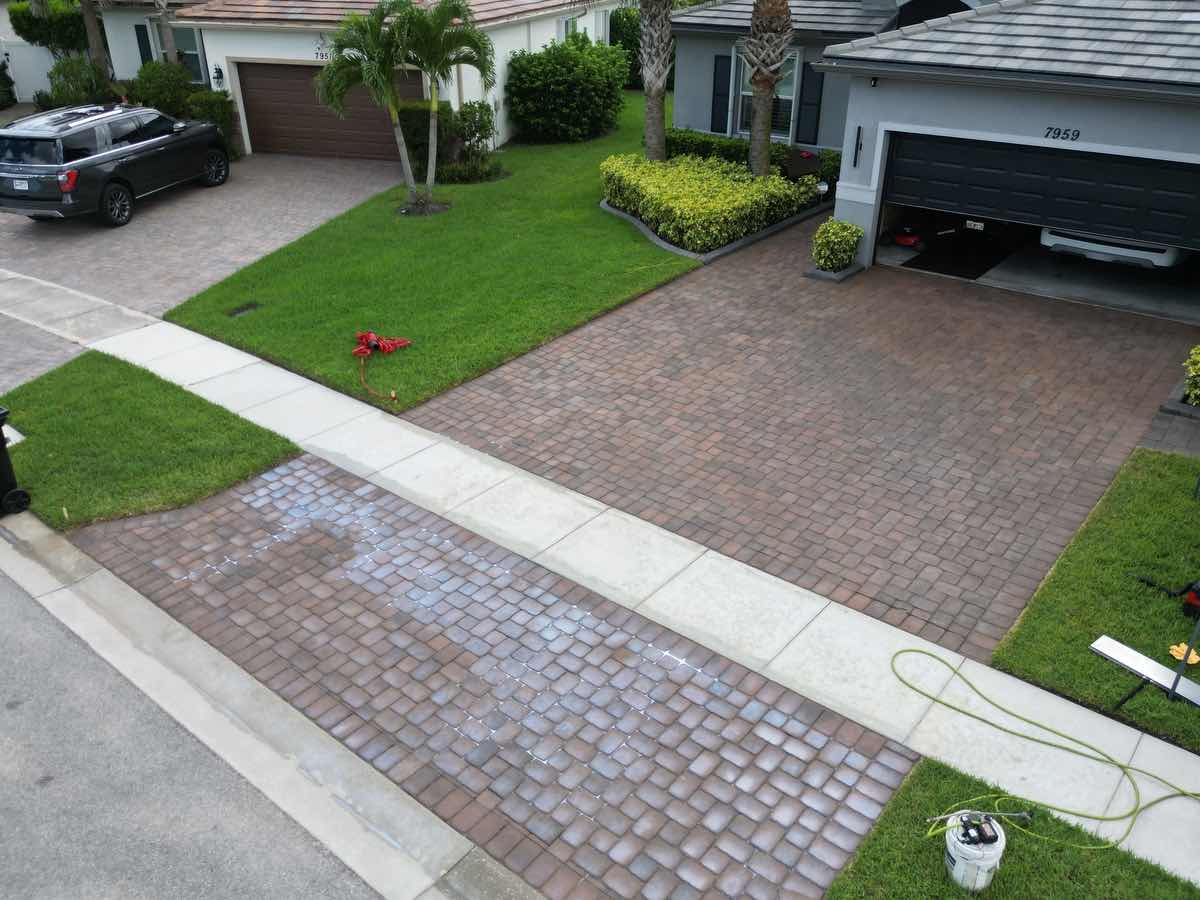
Deep cleaning comes first. This isn’t a job for a garden hose. Professional pressure washing removes years of dirt, organic growth, and surface deterioration, revealing the original paver color underneath. However—and this is crucial—pressure washing alone won’t stop the fading. In fact, without follow-up sealing, it can temporarily make things worse by opening up the pores even more.
Efflorescence removal may be necessary if white haze covers your pavers. This requires specific cleaners that dissolve the salt deposits without damaging the surface. Many homeowners try to scrub this off, only to find it returns within days because the underlying moisture problem hasn’t been addressed.
Professional sealing is the final and most important step. A high-quality sealant appropriate for Florida’s climate will restore color depth and provide lasting protection. We typically recommend resealing every 2-3 years in Port St Lucie’s climate, though this can vary based on sun exposure and traffic levels.
Some homeowners attempt DIY sealing, but there’s a significant learning curve. Improper application—whether it’s the wrong product, poor surface prep, or uneven coverage—can leave you with a blotchy appearance or a seal that fails prematurely. Professional application ensures even coverage, proper penetration, and a finish that actually lasts.
The Long-Term Benefits of Professional Maintenance
Investing in proper paver maintenance isn’t just about aesthetics—though that’s certainly a major benefit. Protected pavers last longer, require less frequent replacement, and maintain your property value far better than neglected surfaces.
Consider this: replacing faded, damaged pavers can cost thousands of dollars. Regular sealing and maintenance is a fraction of that expense and extends your pavers’ lifespan by years, sometimes decades. It’s genuinely one of the best returns on investment for exterior home maintenance.
Protected pavers are also easier to keep clean. Sealed surfaces don’t trap dirt, moss, or mildew the way bare pavers do. A quick rinse or occasional light cleaning keeps them looking fresh, whereas unsealed pavers require constant scrubbing and still never quite look right.
Finally, there’s the curb appeal factor. Whether you’re planning to sell or simply want to enjoy your outdoor space, vibrant pavers make a dramatic difference. First impressions matter, and a beautifully maintained paver surface tells visitors and potential buyers that the property is well cared for.
Take Action Before More Damage Occurs
Fading pavers don’t improve with time—they only get worse. The longer you wait, the more the surface deteriorates, and the harder (and more expensive) restoration becomes. If you’ve noticed your Port St Lucie pavers losing their luster, now is the time to take action.
At Pressure Perfection, we’ve helped hundreds of local homeowners restore and protect their paver investments. Our process combines professional-grade cleaning, proper surface preparation, and quality sealants designed specifically for Florida’s demanding climate. We understand what works in Port St Lucie because we live and work here too.
Ready to see what your pavers should really look like? Get a free quote to assess your paver condition and discuss a restoration plan tailored to your property. You can also see our Google reviews from satisfied customers throughout the area who’ve already experienced the transformation.
Don’t let Florida’s sun and humidity continue stealing the beauty from your pavers. With the right protection and maintenance, those vibrant colors and sharp lines can last for decades—just the way they should.